
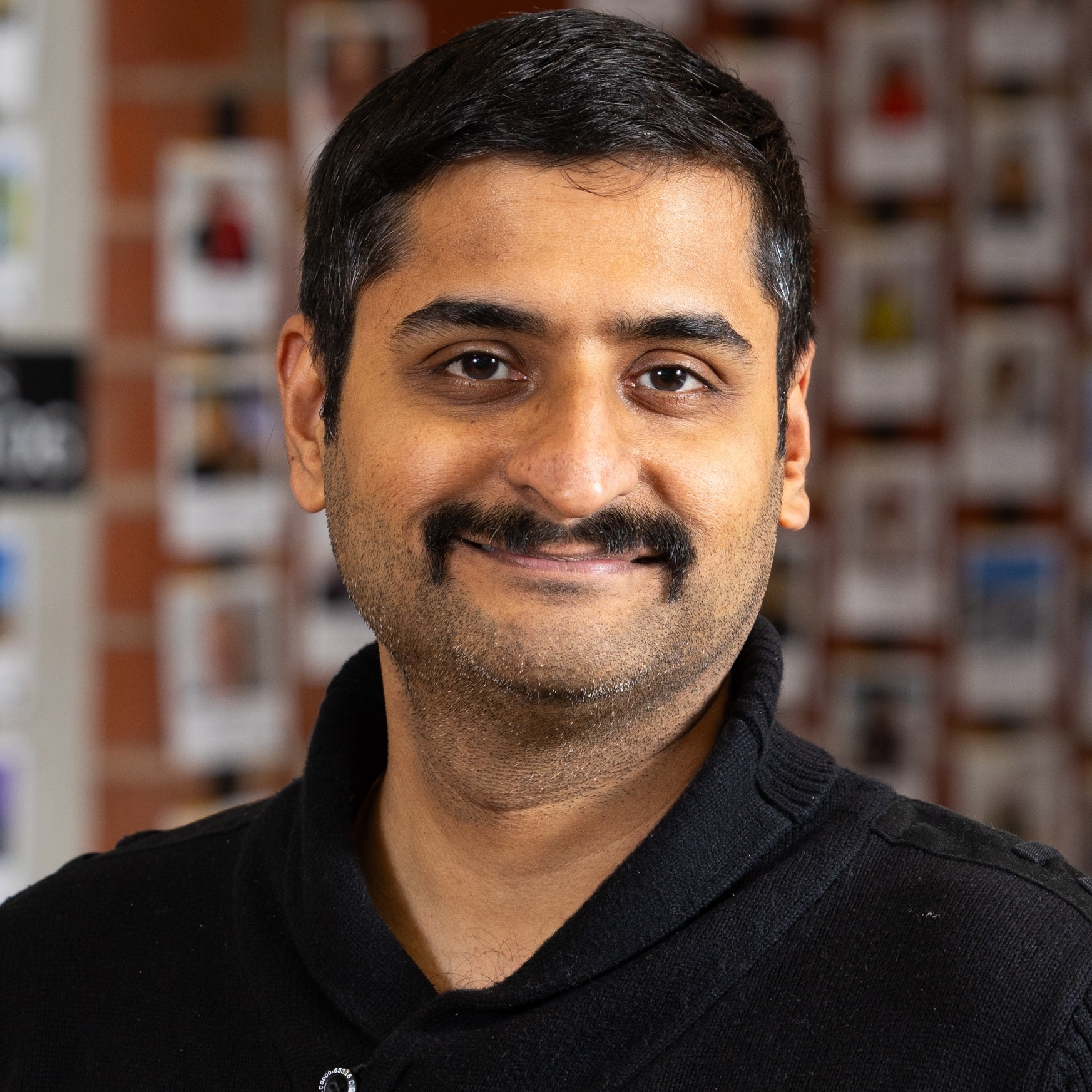
Prem Prakash Jayaraman is a Professor at Swinburne University of Technology, specialising in distributed systems, the Industrial Internet of Things, and mobile and edge computing. He is also Director of Swinburne’s Factory of the Future and Digital Innovation Lab. At the ARC Research Hub for Future Digital Manufacturing, he is Program Leader and Deputy Director.
His work focuses on helping manufacturers extract greater value from the data generated on the factory floor. Rather than viewing this solely as a technology challenge, Prem believes successful digital transformation must be centred on people, operational needs and better decision-making.
Making factory data more useful
Modern manufacturing environments generate substantial amounts of data, but that information is often spread across disconnected technologies, processes and organisational areas.
Prem’s research develops human-centred methods for rapidly analysing plant-floor data and turning it into relevant, accessible insights.
“Manufacturing data is often fragmented across different systems and processes. My focus is on making that data queryable and delivering relevant insights that support human decision-making.”
Creating a single source of truth
Over the past decade, Australian manufacturers have invested significantly in technologies that capture operational data. While these technologies have created important benefits, they have also contributed to new data silos.
Prem’s work helps unify this information into a trusted source of truth, supporting organisation-wide decision-making and enabling manufacturers to gain more value from their existing technology investments.
Research grounded in real-world problems
Prem describes himself as a systems researcher. He is motivated by opportunities to build novel solutions, deploy them in real operating environments and evaluate their performance, benefits and practical viability.
“I have always loved research, particularly applying it to solve real-world problems. For me, research is about building a solution, testing it in practice and understanding whether it delivers genuine value.”
This practical approach shapes his advice to early-career researchers.
“Keep your research problem real. Connect it to industry or another real-world setting and pilot the outcomes in practice. The learning that comes from this is immense.”
Supporting the safe adoption of AI
Prem sees the safe and effective adoption of artificial intelligence as one of the most urgent challenges facing Australian manufacturing.
Many current AI systems are developed using open datasets that do not capture the specialist knowledge held by Australian manufacturers. Prem believes greater awareness, workforce upskilling and new approaches to safely applying AI to sensitive industrial data will be essential.
Start with the problem, not the technology
For manufacturing leaders beginning their digital transformation journey, Prem’s advice is clear:
“Start with the problem, not the technology, even when that technology is AI. Applying technology to a broken process simply creates a technologically enabled broken process.”
He recommends using value-stream mapping to understand the existing process and developing a clear transformation roadmap before investing in new technology.
The opportunity ahead
Prem believes AI-enabled manufacturing represents one of Australia’s most significant opportunities over the next decade.
Potential applications range from data-driven and agentic decision-making to generative design, rapid prototyping and reducing trial-and-error through better use of manufacturing data. Equipping people with the right AI knowledge and skills will be essential to ensuring Australian manufacturing remains globally competitive.
Through the Hub, Prem is helping connect these emerging capabilities with real industry needs, supporting research that can strengthen manufacturing productivity, resilience and competitiveness.
Beyond research
Away from research, Prem is an avid motorcycle rider. He rides a Triumph Street Twin 900 and enjoys commuting by motorcycle, as well as weekend rides through Victoria’s Dandenong Ranges.
Research areas: Distributed Systems • Industrial Internet of Things • Mobile and Edge Computing • Manufacturing Data • Artificial Intelligence • Human-Centred Digital Transformation • Digital Manufacturing